
Patients preparing for ACL reconstruction tend to research the operation thoroughly and the recovery hardly at all, which is the wrong way round given that the surgery takes an afternoon and the recovery takes most of a year. The expectations people carry into that period are frequently shaped by someone else’s experience, an athlete’s return-to-play story, or an assumption that going home the same day means the recovery is correspondingly brief. Five misconceptions come up repeatedly among patients preparing for ACL surgery in Singapore.
1. “Going Home the Same Day Means Recovery Is Quick”
Day surgery describes the hospital stay, not the rehabilitation. Many ACL reconstructions are performed as outpatient procedures, and the recovery that follows runs for months regardless.
The early weeks involve managing swelling, restoring range of movement, and regaining control of the quadriceps, which is slower and more demanding than most patients expect. Discharge on the same day reflects anaesthetic and surgical practice rather than the scale of what follows.
2. “Pain Will Be the Main Difficulty”
Pain is managed and generally improves over the first days. What patients more often find difficult is the stiffness, the swelling that persists longer than anticipated, and the frustration of a knee that will not do what it used to.
Ask your surgical team what pain management applies in your case, what is normal in the first week, and what would warrant contacting the clinic. Knowing what to expect makes the period considerably easier than being surprised by it.
3. “I Will Be Off Crutches Within a Few Days”
Crutch use and weight-bearing depend on what was done during surgery, including whether a meniscal repair was performed alongside the reconstruction, which frequently changes the protocol substantially.
The instruction you receive is specific to your procedure, and following it matters more than matching someone else’s timeline. An orthopaedic clinic in Singapore should give clear written guidance on weight-bearing and crutch use, and the most useful thing a patient can do is follow that rather than progressing faster because the knee feels ready, since what feels tolerable and what is appropriate for healing tissue are different questions.
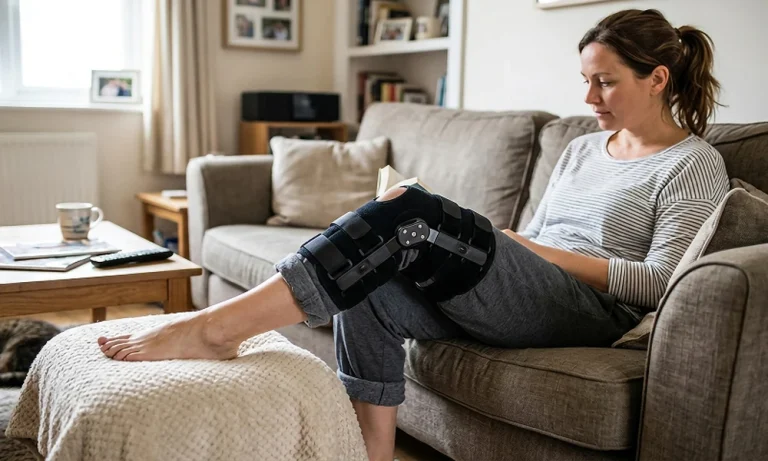
4. “The Brace Is Optional Once the Knee Feels Stable”
Brace protocols vary with the procedure and the surgeon, and patients frequently abandon a brace early because the knee feels fine.
The brace is protecting tissue that is healing rather than responding to how the knee feels, and that distinction matters most in exactly the period when it starts feeling better. Ask how long it is required, in what situations, and when it can be discontinued.
5. “Rehabilitation Is Something That Happens After I Recover”
Rehabilitation begins almost immediately and is the recovery rather than something that follows it. Early work on range of movement and quadriceps activation shapes everything that comes later.
Patients who treat the first weeks as rest and intend to start rehabilitation once they feel better generally find progress slower, since stiffness and muscle inhibition are harder to reverse than to prevent.
Preparing Before the Operation Rather Than After
Most of the difficulty in early recovery is reduced by preparation: arranging rehabilitation and first appointments before surgery, setting up the home for limited mobility, organising help for the first week, and understanding the protocol you will be following.
Ask your team what to expect at one week, six weeks, and three months, what would prompt you to contact them sooner, and who to reach outside clinic hours. Any fever, calf pain, significant swelling, or increasing rather than decreasing pain warrants prompt contact rather than waiting. Nothing here is medical advice, and your protocol depends on what was actually done and should come from your own surgical team.
Contact Specialist Orthopaedic Centre to discuss your procedure, recovery protocol, and rehabilitation arrangements.