
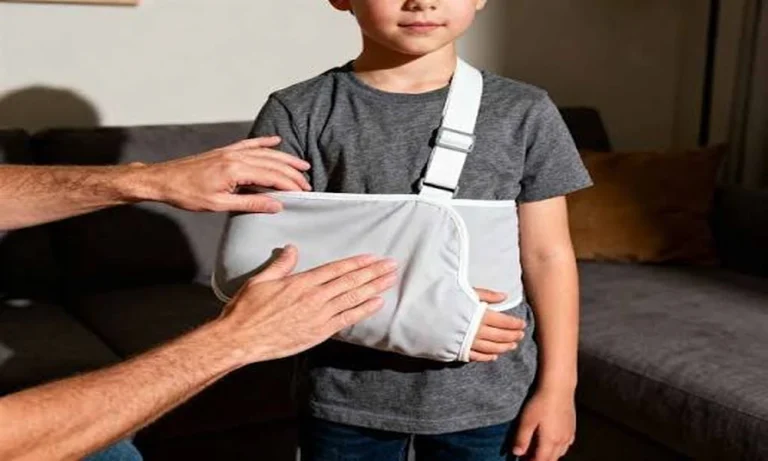
Children are full of energy as they play along all day but sometimes while playing they often injure themselves. An arm, shoulder, wrist and elbow injuries, fracture, dislocation usually happens the most.
These injuries make the child’s life difficult as they are not very mature so keeping their injured parts safe for a faster recovery is also a headache for their parents. So, an arm sling is usually used for protecting the injured arm by restricting the excessive movement and providing constant support to their arm.
But finding the right arm sling pouch for their child out of many arm slings is a challenging task. Moreover children find it uncomfortable at first also. So knowing how to choose the right arm sling and some more points are essential.
Therefore, in this guide we will talk about how to choose the correct arm sling, essential tips for child comfort and care and some mistakes that the child should avoid to get the maximum benefit and aids in a faster healing process.
What is Pediatric Arm Sling
A child arm sling is specifically designed for kids as the design helps with providing support to the injured arm and limiting the excessive movement of the injured area that helps in reducing discomfort and promoting a smoother recovery phase. It is used for injuries like:
- Shoulder dislocation
- Injury related to collarbone
- Wrist and elbow related strains
- Muscle weakness or stiffness
A pediatric arm sling works best for these kinds of injuries and provides comfort during their recovery journey.
Key Comfort and Care Tips
These are some essential tips for your child that help in maintaining comfort and care while using an arm sling.
1. Wear Right Size Sling
Wearing the wrong size can create problems. If you are wearing a wrong size sling there can be two possibilities, one is that the sling is too tight which can cause discomfort, put extra pressure on the neck and result in muscle strain.
On the other hand using a loose sling can also create problems by not providing the appropriate support to the injured arm.
Therefore, wearing a well fitted sling is important. Signs of fit sling are:
- Elbow makes a 90 angle while using the belt
- Wrist are supported properly and not hanging unsupported
- You should not feel any discomfort while wearing the sling
By ensuring proper fit of the sling you can get the best out of it for your child.
2. Comfortable and Breathable Fabric
Using an arm sling or pouch that includes a breathable and soft fabric because your child will wear the sling for a long period of time and this fabric ensures that the child does not experience any kind of discomfort and also allows the child to wear it for a longer duration.
3. Protect the Neck
Using the arm sling for a long period of time can put extra strain on the neck that ultimately leads to neck pain. This neck pain is common and preventable by the following steps:
- Putting a soft pad on the strap to reduce the pressure from the neck
- Let your child take regular breaks between wear to avoid the pressure
- Remove the arm sling when you are experiencing constant pain in the neck
- If your child experience persistent pain in the neck consult your doctor immediately
Preventing the neck pain can provide the child a smoother and pain free experience with the arm sling.
4. Gentle Finger and Wrist Movement
Even though the injured should not move, the uninjured can move freely. So small movements of fingers like up and down and wrist movement can help in reducing the swelling and improving the blood circulation in those parts which was not proper due to less movement.
5. Keeping Hygiene
Hygiene is very important because the arm sling is worn for several days, which leads to the accumulation of dust, sweat and bacteria that can cause skin irritation and other skin problems. So regular cleaning of the arm sling is a must as it helps in preventing the build up of dust, odour and bacteria and protects the child from any skin irritation and a smoother healing.
6. Comfortable Sleep
Sleeping is essential for a better recovery but improper sleeping can put extra stress on the injured arm and further damages it. So sleeping in a good position while wearing the belt is essential. These are some tips you can implement in your child’s sleep routine:
- Make sure your child sleeps in a reclining position with propped up pillows that helps in putting direct pressure on the injured arm.
- Put two pillows on the side of your side to prevent any excessive movement that can put strain on the injured arm.
- If your child feels discomfort during sleep contact your physician.
Avoid these Mistakes
Even if your child follows all the tips but fails to avoid these mistakes then your child will face discomfort while wearing the arm sling. So avoid these mistakes so your child has a safer recovery:
- Make sure your child do not sleep on your injured arm
- Lifting your child when they are wearing the sling
- Ignoring signs of constant pain
Wrapping Up
Children usually are not very mature and they do not know how to protect themselves from danger. That’s why sometimes they get injured. But an arm sling plays a crucial role in helping them recover from the injury.
Healing needs proper care and time. Parents are the ones that take care of the child during the recovery period. So as a parent having an understanding of a pediatric arm sling, its benefits, comfort and care tips, and common mistakes that one should avoid helps their child to get a smoother and a pain free experience during their healing journey.











 Still Need Help to Find Providers?